




Head For The Hills
Coach Alan Newman explains the benefits of hill training...
As we age, we lose muscular strength and power. Elasticity declines; we are more prone to injury, and the net effect is a reduction in our natural speed – we have to work harder to be as fast or even slower than we were. It's not all bad news, though. Endurance, quite literally, endures for as long as we can replenish it in a controlled, progressive manner.
You've all heard about the 10% rule – don't increase your weekly mileage by more than 10% to stay injury-free. runABC Coach Alan Newman also recommends not increasing your longest run by more than 10% each week. Here's another of Alan's maxims: Don't train specifically on a hill with a gradient that's more than 10%!
Hill training is a crucial addition to a well-rounded training programme. Alan suggests starting with once a month, progressing gradually to a weekly hill session for maximum benefit in the winter period. However, those hill sessions must be varied to avoid overuse injuries.
So, what's the best way to incorporate a hill session? Initially, as we enter the winter phase, it's a good idea to introduce more off-road running over varied, preferably hilly, terrain. Tackle the hills with increased energy to maintain pace; drive your arms to keep the momentum going uphill, cruise downhill to recover, allowing gravity to do much of the work.
Once you have conditioned your body to the ups and downs, it's time to get more specific. Alan loves his 'Kenyan Hills'. Unlike hill sprints, where the objective is to power uphill and then walk or jog slowly back down for recovery, Kenyan Hills involve a steady and consistent pace up and down, with no recovery. You need to find a gentle slope that takes 45-90 seconds and run for a set time, such as 20-40 minutes, adding time as you improve.
Kenyan Hills will improve speed endurance and make the gradients in races less of a challenge, but that's only part of the picture. To improve hill running technique, you will need to include some hill sprint sessions (one per three Kenyan Hills or off-road hilly runs). Here, the object is to run hard up the hill, emphasising knee lift and vigorous arm swing to maximise speed. Recovery is a slow jog or walk down.
The hill can be steeper (10% gradient) but shorter (30-45 seconds), and you can progress this type of session simply by adding reps, starting with six and adding two per month until you reach 12, or your maximum. You'll know when you hit your personal limit!
To summarise: Start hill training by adding a hilly fartlek run each week to condition your hill climbing (and descending) muscles. Then introduce Kenyan Hills and gradually a specific hill sprint session at a ratio of one sprint to three Kenyan Hills/hilly fartlek sessions. Finally, make hills your friend and look forward to them in races, because you have trained for them.
Good luck and enjoy those hills...
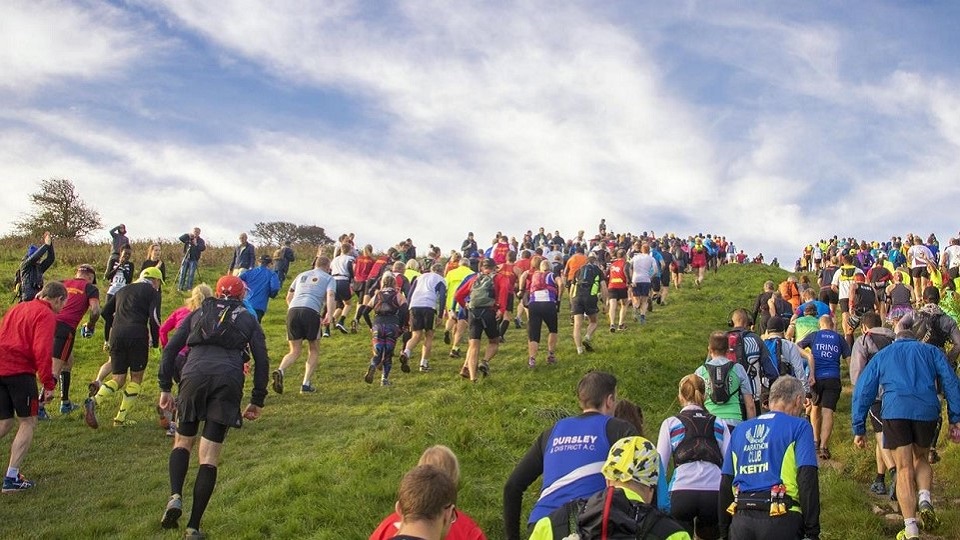
Image courtesy of Beachy Head Marathon